
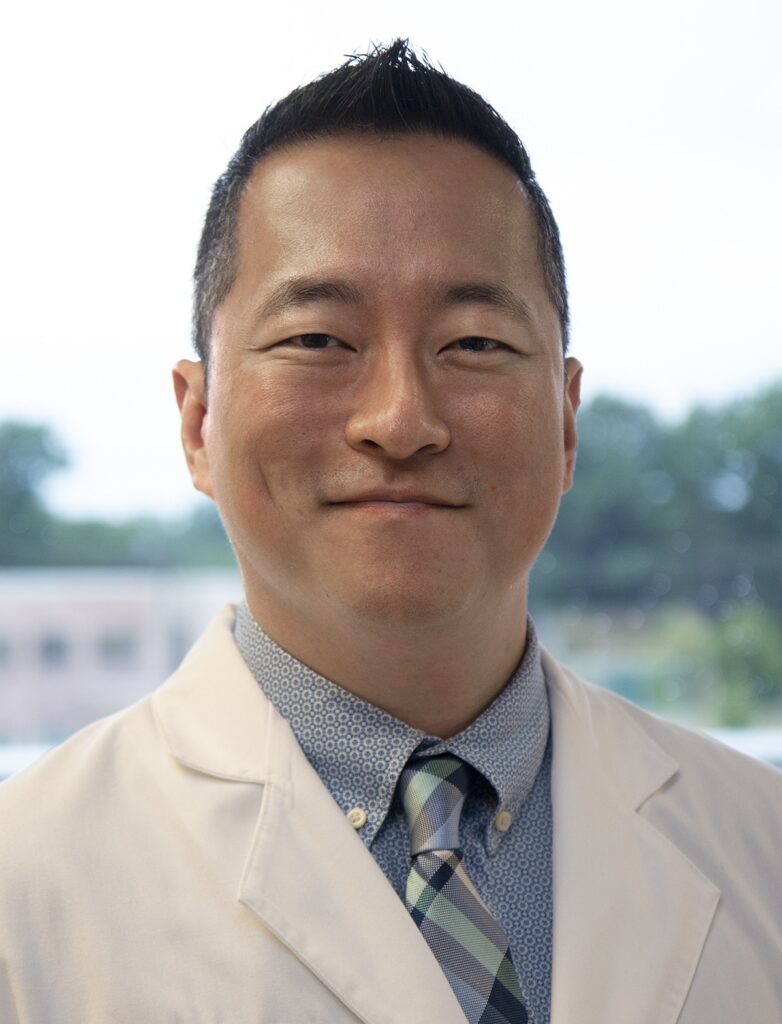
What do you wish you had known earlier in your surgical training? ACOS member David Kim, D.O., shares thoughtful perspectives on training, mentorship, career development, and what it means to be a general surgeon.
We sat down with Dr. Kim for an interview to hear his perspective on choosing a specialty, making the most of residency, building confidence and learning from mentors throughout a surgical career.
Q: What is one thing you wish you knew earlier in your surgical training?
A: General surgery is a unique specialty in that we provide a measure of security and confidence in any hospital across all departments that no other specialty provides. What that means is that we are tasked with taking on questions and responsibilities across a broad spectrum that do not necessarily relate to the actual work that we are responsible for but provide a service for staff and colleagues because our training develops the confidence to be able to do so.
Q: What’s one piece of advice you would give to medical students or residents?
A: For medical students: spend time on personal insight and devote lots of time early on into thinking about what specialty suits you the best. Don’t worry about how much money you’re going to make or what lifestyle a certain specialty is going to bring you. You need to find a specialty that you’re going to work for the rest of your professional career; better to pick one based on your persona and work ethic rather than annual salary and benefits. Being able to choose a specialty early on means you can start to prepare to speak on that specialty (anatomy, surgical lingo, etc.), this develops a strong foundation during clinical years when you can show your best to your chosen specialists and gives you the upper hand once you begin work in that residency. Residency into surgical specialties only gets harder as years go on. Put in the work early and gain the upper hand.
For residents: Residency is the last time that you get to make hard decisions under the guidance of an attending physician. The day you leave your residency is when you make all of your professional/medical decisions without someone looking over your shoulder. Find extra opportunities to broaden your foundational knowledge, sharpen the skills you already have, be a little bit obsessed with your chosen specialty. All new attendings go through a period of Imposter Syndrome, the breadth and intensity of your training can minimize this significantly if you have the willingness to go above and beyond.
Q: What lessons have you learned during your career?
A: Every specialty is filled with both fascinating pathology and irritating nonsense; the two are not always balanced. You have to be equally good at the challenging work and have patience with the rest. The best surgeons are the ones who navigate both with confidence and grace.
Q: Do you have a favorite memory from your career?
A: The moment I graduated from residency, I knew that my training had been good and that I was going to confidently walk into my new job as an attending based on the hard work put into becoming an attending surgeon.
Q: How has mentorship influenced your career?
A: Every encounter with an attending surgeon provides a little piece of experience to add to your overall view and knowledge of the world of surgery. My persona as a General Surgeon is built upon thousands of bits of advice and experiences. Strong mentorship can significantly influence how you navigate our world.
Q: What should every patient should know before going into surgery?
A: Every patient that you are going to operate on should know that you are a safe surgeon. Not a flashy one, not someone who is unconfident in their skills. Their trust in you has to be based on your mission to provide a safe surgery with their best interests at hand.
Dr. Kim’s experiences highlight the value of preparation, mentorship and continued growth throughout a surgical career. We appreciate him taking the time to sit down with us and share his perspective with the ACOS community.