
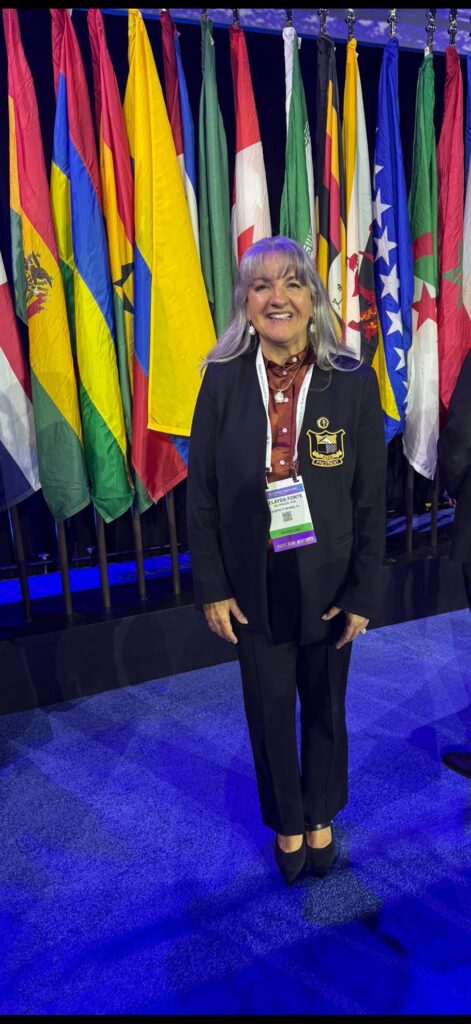
Every surgeon remembers the exact moment the path became clear. For some, it is a lifelong family calling; for others, a pivotal rotation in medical school. But for ACOS Past President Nelayda Fonte, D.O., DFACOS, FICS, the journey to a high-stakes career in trauma and critical care started in the most unexpected place: a second-grade classroom, a class pet frog, and a burning curiosity about how things work.
In this reflective piece, Dr. Fonte shares her personal story of how an early, hands-on fascination with anatomy blossomed into a dedicated career fixing what is broken, running toward the adrenaline of the trauma bay, and finding the profound, life-affirming joy that turns a demanding profession into a true calling.
As I ponder my love of surgery and what drew me to it, I must think back to when I decided I wanted to BE a surgeon.
We all have different moments in life that lead us to where we are today. A personal experience, a story told, advice given: they can all influence our decision-making. Mine comes from a very basic and early sense of curiosity: “What’s on the inside?”
A class pet frog died in second grade, and a brilliant teacher thought to make it a learning opportunity. A dissection was performed, and I was hooked. I even volunteered to do the dissection! That’s it, nothing more glamorous than a dead frog.
But that led to wanting to know more: How do things work? How do they interact? How do we fix what is broken? Science and medicine fed my curiosity and compelled me to learn more. But I’m a DOer, not just a thinker. I like to fix things, and that’s what surgery is all about.
Surgery has the ability to provide instant gratification, which I found very rewarding and directly attributable to something I did. It requires attention to detail, quick thinking, technical skills, and ownership of the patient unlike most other specialties. When you operate on someone, they are willfully putting their lives in your hands. That trust should be respected and paid back with our commitment to always do right by them.
I eventually went into trauma/critical care because there was nothing like the adrenaline rush that comes from a severely injured patient, maybe even coding, arriving in the trauma bay, and through our skills and knowledge, bringing them back, stabilizing them, and eventually watching them be discharged. That responsibility of assessing them, determining and prioritizing their injuries, operating and treating, and managing them through discharge is the most rewarding part of my career as a trauma surgeon.
When we do what we love, what gives us joy, what makes us feel like the day was worthwhile, then we aren’t really “working.” Finding that passion is the biggest challenge and the biggest gift in life. A job is something people do to make a living and support their families. Surgery should never be a job. Yes, we work long hours; yes, we miss things at home. BUT when you walk into a recovery room after a long case and a new nurse comes running up to you, announcing to everyone in the room that YOU saved her life when she was a teenager after a horrific car accident, and here she is, now a nurse paying it forward thanks to you, your heart swells. And that is never a JOB.