
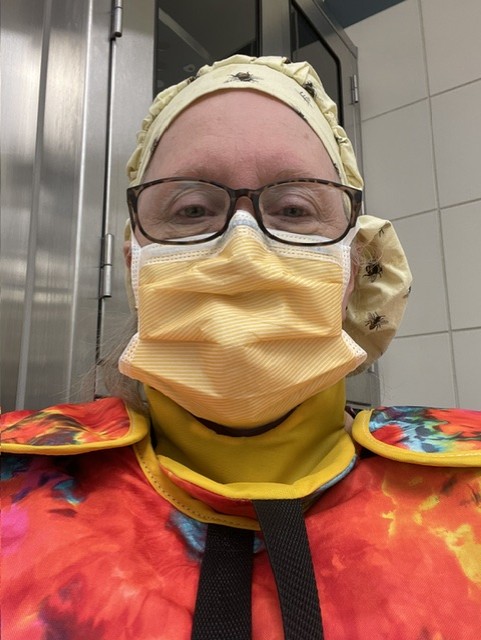
Why urology?
For many surgeons, the path to a specialty is anything but straightforward. For ACOS member Lynne M. McCormick, D.O., FACOS, urology wasn’t something she chose. It chose her.
Dr. McCormick shares her thoughts on urology, the changing surgical workforce, the role of robotics, and her advice to medical students exploring their specialty options:
“Urology. I have to say, I didn’t choose it, it chose me. After I gave into that life choice, I discovered that I didn’t have to look for work, it looks for me. I’ve always said that, and it’s true. No one knew, when I started in this business, that the critical shortage of physicians was coming. When I was a trainee, what I saw was private practice groups that competed with each other for work. No one was an employed physician. It was unheard of. The cut in Medicare dollars back in the early 1990s by Congress cut training dollars by roughly fifty percent. The dominos fell from there. Retirement, death, burnout, Covid, the numbers of all physicians plummeted. Hence, the shortage we have today.
So, how does a medical student choose a specialty, especially one like urology? Rarely do students even get exposed to our specialty. I have often said, urology is the best kept secret of surgery. We have fewer life-threatening emergencies than most surgical specialties, and fewer, limb or organ sparing emergencies as well.
The advent of robotics, however, has heralded a new interest in our specialty. The robot is a workhorse in our operating rooms. Students who are interested in the use of the robot will find urology one of the specialties using the robot primarily for their cases. While on their required surgical rotations, I recommend that students look at what other specialties have cases going on that might be interesting. ENT, vascular, cardiothoracic, plastics, urology, ophthalmology, and whatever else might pop up on the tacking board. Most attending surgeons are willing to have a medical student observer on their cases. We like to have students interested in our specialties. We know that the elective time allotted to rotations in the specialties is quite limited. Not only does having a student in our operating rooms help to bolster our specialty, it can help, even if the student chooses another surgical specialty, to learn a little more about what we do every day and why.
When it comes down to the choice, I tell students: What makes sense to you? What specialty do you find easiest to learn and understand? What articles and internet feeds do you click on? There’s your answer. Mine was urology.”