
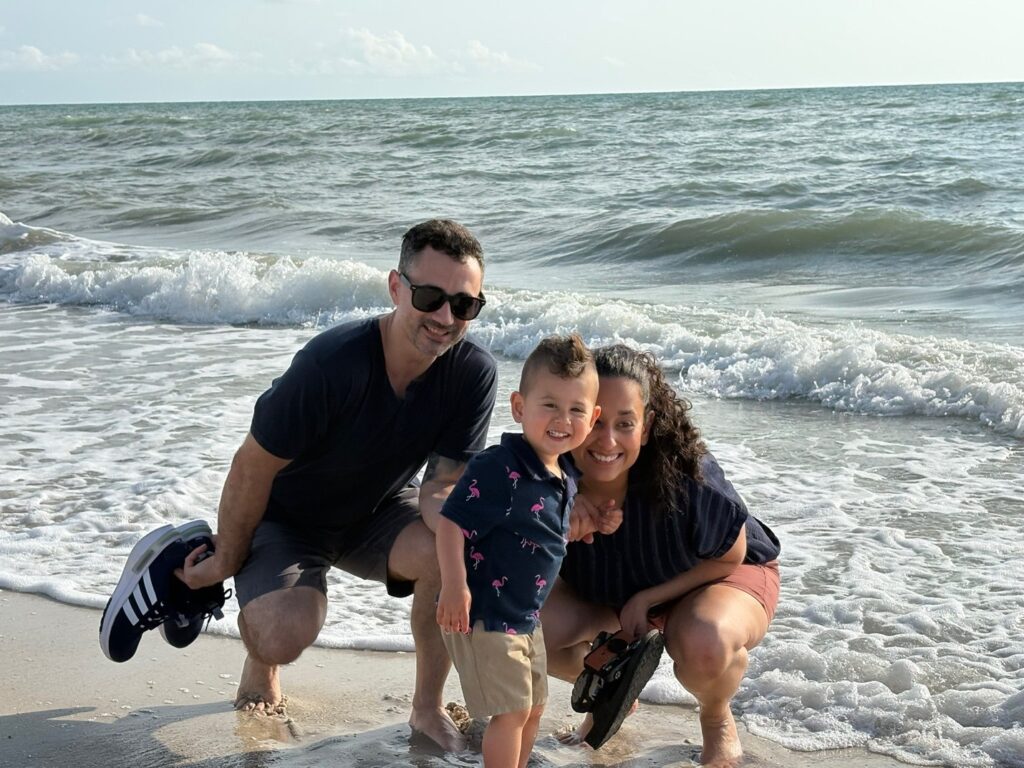
Balancing surgical training and family life is a challenge many residents and surgeons navigate throughout their careers. ACOS member Zachary Brewster, D.O., shares his perspective on finding intentionality, staying connected with loved ones, and building a meaningful life while pursuing excellence in surgery.
“My name is Zach Brewster, and I am a soon-to-be PGY-3 General Surgery resident in the Mid-Atlantic region. Having recently turned 40 during residency while raising a 3-year-old son with my wife, I have learned that balance is not something you achieve once and maintain perfectly—it is something you work at continuously, knowing there will inevitably be moments of failure along the way. Surgical training is demanding for every resident. It is long, exhausting, and all-consuming, often extending far beyond the walls of the hospital. Adding family to that equation introduces an entirely new dimension to how time, energy, and attention are allocated. More often than not, I feel as though I am running on reserve long before the day is over.
The challenge becomes even greater given I am away six months of the year on outside rotations. Pursuing a future in Colorectal Surgery while also tutoring and mentoring medical students means there are days when every hour feels spoken for. Through all of this, the greatest lesson I have learned is the importance of intentionality. Staying connected with my family requires creativity and effort. When I am away, that means FaceTiming for bedtime stories, sending videos throughout the day—my son especially loves seeing the Da Vinci robot and saying hello to my co-residents—or planning small surprises for my wife simply to remind her that she remains my priority despite the distance. When I am home, I try to protect that time fiercely and be fully present in the moments we have together.
Now, this would be so easy if the answer was simply, “just be intentional and everything will be great!” What I discovered, however, is that intentionality alone does not automatically make balance easier. It requires tremendous effort, planning, and, at times, a level of emotional energy that can be difficult to find after long days caring for critically ill patients. One of the hardest aspects of surgical training has been learning how to turn off “surgeon mode.” In the hospital, we are trained to constantly anticipate complications, stay mentally engaged, and carry the responsibility of patient outcomes with us at all times. That mindset does not always disappear when I walk through the front door or call home at the end of the day. There are moments when the emotional weight of the profession, the fatigue, and the constant mental checklist make it difficult to slow down and simply be present as a husband and father. I have had to learn that presence means putting the phone away, playing football or hockey with my son, reading him a book, and listening carefully to my wife instead of mentally replaying the day’s operations or preparing for tomorrow’s.
Surgery demands an extraordinary amount from us personally and professionally, but my family continually reminds me why those sacrifices matter. In many ways, caring for patients and returning them to their families has deepened my appreciation for my own. For me, success in residency is not defined solely by becoming a skilled surgeon and effective clinician, but by learning how to pursue excellence in medicine while remaining fully present for the people who matter most. If any reader takes anything from this it would be – there’s always time for family, be creative in inventing opportunity and time, take care of yourself (you’re no good to anybody if you’re unwell), disciplined effort in small increments continuously over a long period of time net meaningful results, and find something good from each day. While we know this season of residency and fellowship will be difficult, it is just a season, and there’s not a day goes by that my wife, or I regret the life we are building together.”Top of Form
Residency is a demanding season, but the lessons learned during this time extend far beyond the operating room. Dr. Brewster reminds us that with intentional effort, self-care, and a commitment to the people who matter most, it is possible to grow as a surgeon while staying connected to the life being built outside of medicine.